Loading...
Serving Dubuque, IA and surrounding areas. (563) 227-0181
Cold floors and a furnace that never seems to catch up are fixable problems. Proper basement insulation keeps heat where it belongs and cuts your monthly gas bill.
Basement insulation in Dubuque creates a thermal barrier between your living space and the cold ground, slowing heat loss through your foundation walls and floor - most jobs on an average home are completed in one to two days, with a noticeable improvement in floor warmth and heating efficiency. If your first floor never quite reaches the temperature on your thermostat, or your gas bill climbs every November and does not come back down until April, your basement is almost certainly part of the reason.
Dubuque has a large share of homes built before 1960, and many of those homes were constructed with bare concrete or block basement walls - no insulation at all. That is not a flaw in the original construction; it is simply how homes were built before the energy crises of the 1970s pushed builders to take insulation seriously. The result today is a lot of Dubuque homeowners losing a significant share of their heating dollars straight through the foundation. If you have already looked at your attic and your windows, the basement is the next place to check. Pairing basement insulation with crawl space insulation addresses the full lower envelope of the home for homes that have both a basement and a crawl space section.
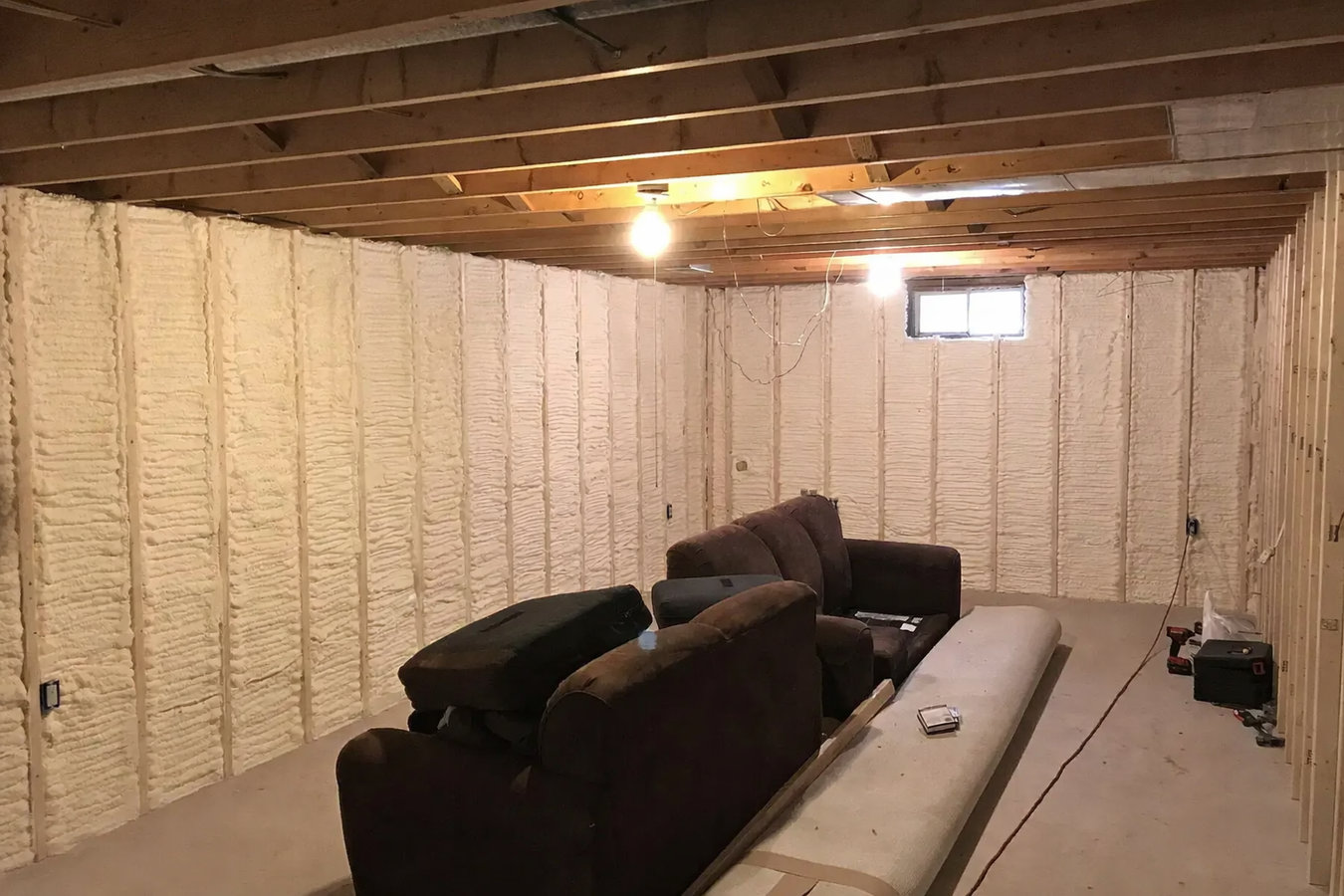
For homes where moisture or air leakage around pipes and wiring is the bigger issue, closed-cell foam insulation applied to the rim joist and foundation walls seals and insulates in a single step.
If your gas bill climbs sharply from November through March and your home still feels drafty or unevenly heated, your basement is a likely culprit. In Dubuque's climate, heat loss through an uninsulated foundation can account for a meaningful share of your total heating load. If you have already had your furnace serviced and your bills are still high, the basement walls are worth a close look.
Walk across your first floor in socks on a January morning. If the floor feels noticeably cold - especially near the edges of rooms above the basement - heat is escaping through the floor and foundation rather than staying in your living space. This is one of the most common and most overlooked signs that basement insulation is missing or inadequate.
Dubuque's proximity to the Mississippi River and its mix of bluff-side and low-lying lots means basement moisture is a real and recurring issue for many homeowners. Condensation on walls, a persistent musty smell, or white chalky deposits on concrete are signs that moisture is moving through your foundation. These conditions need to be assessed before insulation goes in - and they are also a signal that your basement thermal performance is likely poor.
A large portion of Dubuque housing stock predates modern insulation standards, and many of these homes left the factory with bare concrete or block basement walls. If you have lived in your home for years and cannot recall anyone ever insulating the basement, there is a strong chance it has never been done. A quick visual check - look for any material attached to the walls or between the floor joists above - will tell you immediately.
Every basement insulation job starts with a walkthrough - looking at the walls, floor joists, existing insulation if any, and any signs of moisture. We check for conditions that need to be addressed before materials go in, because insulating over a moisture problem traps it. The two main approaches are insulating the basement walls themselves - best when you use the basement as living or work space - or insulating the ceiling between the basement and the first floor, which makes more sense for unheated unfinished spaces. We will walk you through which approach fits your home and your goals before anything is quoted.
For older Dubuque homes with stone or brick foundation walls, or homes with irregular surfaces and gaps around old plumbing, we often recommend closed-cell foam insulation because it adheres to uneven surfaces and seals air gaps in a single application. For flat poured-concrete walls in better condition, rigid foam board is a reliable and cost-effective option. We also coordinate basement wall work with crawl space insulation when both areas need attention - common in homes where part of the lower level is a full basement and part is a low crawl space.
Best for finished basements or spaces used as living areas - insulates the walls around the perimeter.
Targets the framing at the top of the foundation wall, one of the most common sources of cold-air infiltration in Dubuque homes.
Insulates the ceiling between an unheated basement and the living space above - keeps floors warmer without conditioning the full basement.
Suited to older Dubuque homes with stone, brick, or older block foundations where batts or boards do not conform well to the surface.
Dubuque sits in a climate zone where the heating season stretches from October through April and winter temperatures regularly drop below zero. An under-insulated basement is not just a comfort issue - it is a significant driver of your monthly gas bill for half the year. Homeowners here tend to see faster payback on basement insulation than in milder climates simply because the heating demand is so long and intense. The city also has an unusually high concentration of pre-1960 housing, particularly in the bluff neighborhoods and older streets near downtown, where bare concrete or block foundation walls are still the norm in many homes.
Dubuque geography adds another layer: the city sits along the Mississippi River, and many homes are built into limestone bluffs or on low-lying ground near the river. Seasonal groundwater pressure and surface water running downhill toward foundations make basement moisture a genuine and common concern here. We work on homes throughout the area and regularly serve customers in Iowa City and Cedar Rapids, where the same pre-1960 housing challenges and Midwest heating seasons drive similar demand for basement insulation work.
We will ask about your home age, basement size, and what is prompting the call. This helps us show up prepared and give you an accurate estimate. Most Dubuque contractors can schedule an on-site visit within a few days.
We walk through your basement, look at the walls, floor joists, and any existing insulation, and check for moisture. The visit takes 30 to 60 minutes and gives us everything we need to quote the job accurately.
You receive a written estimate covering the scope of work, the materials, and the total cost - no surprises on installation day. If you are comparing bids, make sure each one covers the same scope before comparing prices.
Most jobs take one to two days. When the work is done, we walk you through the finished installation - pointing out what was done, answering questions, and noting anything worth monitoring - before we leave.
Free estimate, no obligation. We reply within 1 business day and will give you a straight answer about what your home actually needs.
(563) 227-0181We assess your basement for moisture conditions before recommending or installing any material. Putting insulation over a wet foundation wall creates a mold problem - which costs far more to fix than the original moisture issue. We tell you honestly if waterproofing needs to come first.
A large share of Dubuque homes were built before 1960, with stone, brick, and older block foundations that behave differently from poured concrete. We work in these homes regularly and know what each foundation type needs, including how to seal irregular surfaces that standard batts cannot cover.
Alliant Energy serves most of Dubuque and has offered rebate programs for qualifying insulation upgrades. We know the current program requirements and can help you document the work for a rebate application - so you are not leaving money on the table after the job is done.
We follow installation guidelines published by the U.S. Department of Energy, which means no gaps, no compressed sections, and a walkthrough at the end so you can see exactly what was done. You will never wonder what you paid for.
Every job we take on in Dubuque is backed by an honest assessment and clear written documentation. We work in your home the same way we would work in our own.
The highest-performance option for rim joists and irregular foundation surfaces - seals and insulates in a single pass.
Learn more →For homes where part of the lower level is a crawl space - addresses cold floors and moisture from the ground up.
Learn more →Schedule your free basement insulation estimate today. We serve all of Dubuque and the surrounding area and reply within 1 business day.