
Loading...
Serving Dubuque, IA and surrounding areas. (563) 227-0181
Dubuque Insulation serves Janesville homeowners with blown-in insulation, spray foam, attic insulation, and crawl space services - written estimates, no-pressure assessments, and replies within 1 business day.
We work on homes throughout Janesville and Rock County - from the older Victorian and Craftsman houses near downtown and along the Rock River to the postwar ranch homes that fill the city's subdivisions to the north and west. If your home is losing heat through the attic or crawl space, we can tell you exactly what it will take to fix it.
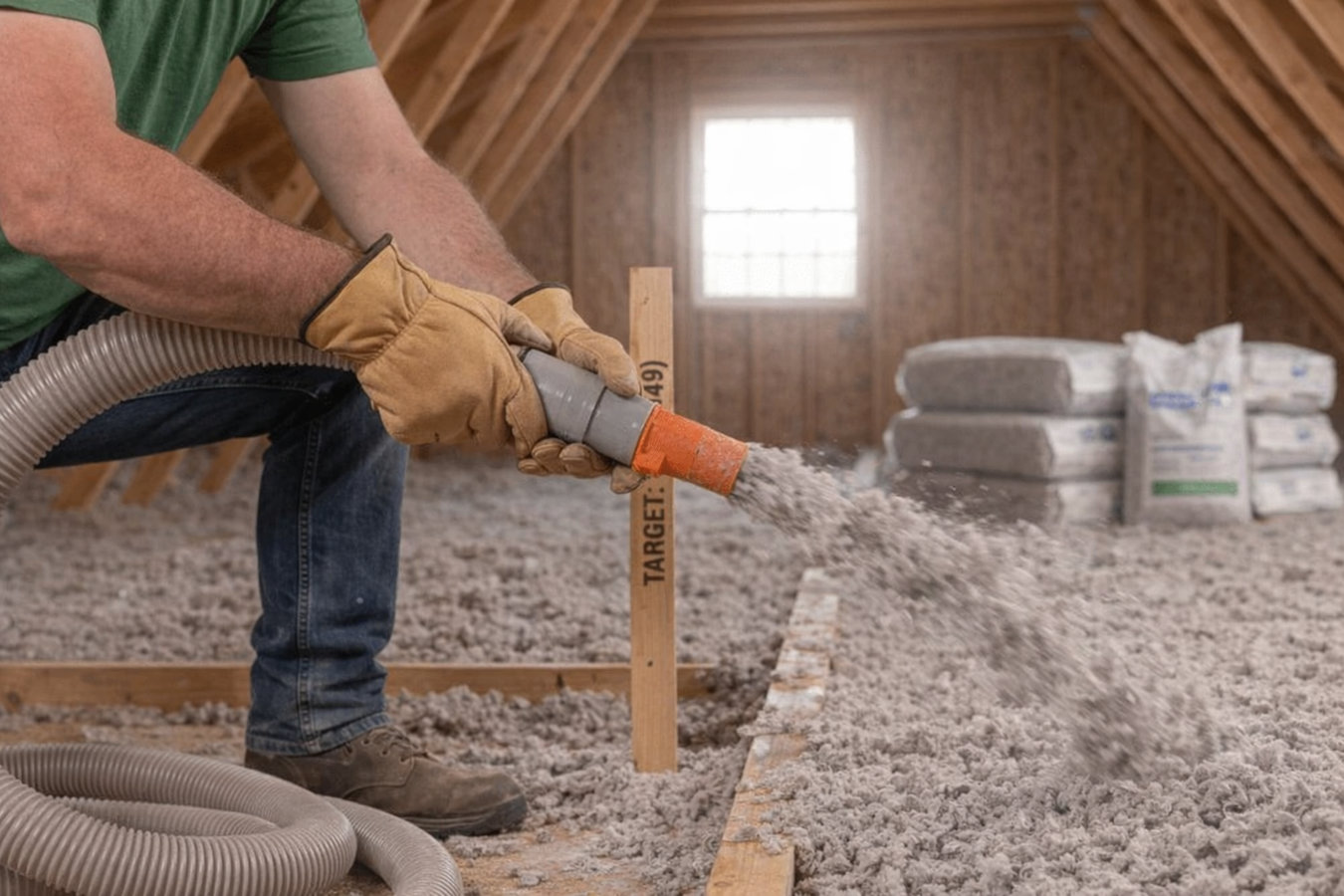
Janesville has a large supply of homes built before 1960 - Victorian two-stories near downtown, Craftsman bungalows along the Rock River corridor, and early ranch homes from the postwar era - and nearly all of them have attic insulation that falls well short of what Wisconsin currently recommends for this climate. Blown-in loose-fill is the right material for these spaces: it fills irregular framing, low eave slopes, and tight corners by machine, reaching areas where hand-placed batts leave gaps. Our blown-in insulation work starts with air sealing the gaps around fixtures and penetrations before any material goes in - the step that makes the actual difference on your utility bills.
Janesville's freeze-thaw winters push frost more than 40 inches deep into Rock County's clay-heavy soil, and the rim joists at the top of basement walls are one of the biggest cold-air entry points in homes that have never been properly sealed. Closed-cell spray foam at the rim joists and crawl space walls provides both insulation and a vapor barrier in a single application, stopping the cold-air infiltration that blown-in attic work alone cannot address. It is especially effective in Janesville's older homes where the gap between foundation and first-floor framing has been open for decades.
Janesville winters regularly drop below 10 degrees Fahrenheit, and homes that were built under pre-1980 insulation standards are losing significant heat through the ceiling every month from November through March. Bringing attic insulation up to current Wisconsin levels - paired with air sealing before material goes in - reduces monthly heating costs and eliminates the ice dams that form along the roofline when heat escapes through the attic and melts snow unevenly.
Rock County's clay soils drain slowly, and spring snowmelt from Janesville's 30-plus inches of annual snow can pool around foundations and under crawl space floors for weeks. Crawl spaces in this city deal with consistent ground moisture, especially in March and April. Insulating crawl space walls with closed-cell foam and pairing that work with a vapor barrier on the ground floor protects the wood framing from the rot and mold that follow repeated wet-dry cycles through Wisconsin winters.
Full basements are common across Janesville's housing stock, and uninsulated basement walls and rim joists are a steady source of heat loss that most homeowners do not track separately from the rest of the house. Insulating these areas stabilizes floor temperatures above, reduces cold-air infiltration through the foundation, and helps mechanical equipment run more efficiently in a conditioned rather than unheated space - particularly relevant in Janesville's older homes where the basement houses the furnace and water heater.
Insulation slows heat transfer but does not stop air movement on its own. In Janesville's older Victorian and balloon-frame homes near downtown - where open wall cavities run from basement to attic - air sealing the gaps around light fixtures, plumbing penetrations, and the attic floor is what keeps the insulation working as intended. Air sealing done before blown-in material is installed is the single most important variable in whether the project shows up on your gas bill or not.
Janesville winters are long and unforgiving. The city averages around 30 inches of snow per year, temperatures regularly fall below 10 degrees Fahrenheit in January and February, and Rock County frost depths can reach 40 to 50 inches in a hard winter. The heating season runs from October through April. For homes that were built before the 1980s - and that is a large share of Janesville housing - those seven months represent a sustained energy loss through ceilings, walls, and crawl spaces that were never insulated to modern standards. The freeze-thaw cycles that define Wisconsin winters are especially punishing on the clay-heavy glacial soils that underlie most of Rock County. Clay expands and contracts with moisture, shifting slabs, heaving sidewalks, and slowly working on foundation walls in ways that open new air infiltration pathways each year.
Janesville also has a specific housing stock challenge. The city includes a strong core of homes built between 1900 and 1940 - Victorian two-stories and Craftsman bungalows near downtown, early Colonial Revival houses in the established neighborhoods close to the Rock River, and a large supply of postwar ranch homes that were built quickly and affordably in the 1950s and 1960s. All of these housing types share the same issue: they were constructed under insulation standards far below what Wisconsin recommends today, and many have had nothing added since. An insulation contractor who has worked in this housing stock knows what to expect inside the attic and crawl space of a 1920s bungalow versus a 1955 ranch - and that knowledge shapes every decision about material selection, coverage depth, and where to focus the air sealing work first.
We work on homes throughout Janesville - from the older neighborhoods near downtown and Riverside Park, where Victorian and Craftsman housing is common, to the ranch-home subdivisions north and west of the city center, where mid-century construction is the norm. Permit requirements for insulation work in Janesville run through the City of Janesville Community Development department, and we handle the paperwork when a project requires one - so you do not have to navigate that process yourself.
Properties near the Rock River require a closer look before we recommend an approach. Low-lying homes near the water deal with spring flooding risk and persistently higher soil moisture, which affects the crawl space and basement insulation strategy. The Lincoln-Tallman House neighborhood and the older blocks near downtown are where we most often encounter homes with original knob-and-tube wiring, which needs to be assessed before insulation covers it. We flag this during the assessment visit and do not proceed until you have a clear picture of what needs to happen first.
We also serve homeowners in Madison, WI to the north, where the university housing stock presents its own set of insulation challenges, and in Rockford, IL to the south - so if you have family in either city dealing with the same heating problems, we can help them too.
Reach out by phone or through our contact form and we will respond within 1 business day. We ask a few basic questions about your home - age, which areas concern you, and whether you have noticed specific problems like cold rooms or high bills - so we can show up to the assessment prepared.
We walk through the areas you want addressed - attic, crawl space, basement rim joists - and measure what is already there. We look for moisture conditions, old wiring, and air leak pathways before giving you a written estimate that specifies coverage area, depth, and materials. There is no pressure to book on the spot.
On the work day, we seal the gaps around fixtures and penetrations before any insulation material goes in - this is the step that makes the project perform. Most Janesville attic jobs are completed in a single day. You do not need to leave your home for blown-in work, though spray foam jobs require you to stay out for at least 24 hours after application.
Before we leave, we walk you through what was done and show you the coverage. For blown-in attic jobs, we leave depth markers so you can verify the insulation level yourself. You will see the difference on your heating bills within the first full cold month after installation.
We serve Rock County homeowners with free in-home assessments, written estimates, and no-pressure advice. Call or submit your project details and we will get back to you within 1 business day.
(563) 227-0181Janesville is the county seat of Rock County and home to roughly 66,000 people, making it one of the larger cities in southern Wisconsin. The city sits on both sides of the Rock River, which bisects the community and gives many neighborhoods a riverside character. The older areas closest to downtown feature Victorian-era and Craftsman-style homes that were built in the late 1800s and early 1900s, many of which are still owner-occupied today. Riverside Park runs along the river through the heart of the city and is one of the most recognizable public spaces in Janesville. The city has a homeownership rate of around 60 percent, which means most residents have a direct stake in maintaining their properties.
Large sections of Janesville were built out in the 1950s and 1960s with single-story ranch homes and Cape Cod-style houses, and these neighborhoods fill the residential areas north and west of downtown. The city also has newer subdivisions on its outer edges that date from the 1990s through the 2010s. This mix of housing ages - from pre-1920 downtown bungalows to 1990s colonials - means insulation needs vary significantly block to block. Janesville sits about 40 miles southeast of Madison, WI and about 30 miles north of Rockford, IL, and we serve homeowners in all three areas.
High-performance spray foam that seals and insulates in one application.
Learn more →Loose-fill insulation blown into walls, attics, and hard-to-reach spaces.
Learn more →Keep moisture out and temperatures stable with crawl space insulation.
Learn more →Improve comfort and soundproofing with insulated interior and exterior walls.
Learn more →Stop drafts and air leaks to maximize your insulation's effectiveness.
Learn more →Insulate basement walls and rim joists to cut heating costs year-round.
Learn more →Dense, moisture-resistant closed-cell foam for maximum thermal performance.
Learn more →Lightweight open-cell foam ideal for interior walls and sound dampening.
Learn more →Seal attic bypasses and gaps before adding insulation for best results.
Learn more →Heavy-duty vapor barriers that protect crawl spaces from ground moisture.
Learn more →Professional vapor barrier installation for walls, floors, and crawl spaces.
Learn more →Commercial-grade insulation for offices, warehouses, and industrial facilities.
Learn more →Serving these cities and communities.
Schedule a free in-home assessment and get a written estimate for your Janesville home - no obligation, no pressure, and we respond within 1 business day.