Loading...
Serving Dubuque, IA and surrounding areas. (563) 227-0181
High heating bills, cold rooms, and drafty walls are signs your home is losing heat faster than your furnace can replace it. We cover every part of the envelope to fix it.
Home insulation in Dubuque addresses heat loss across your entire building envelope - attic, walls, basement, and crawl space - most projects are scoped and completed within one to three days depending on how much of the home is included. It is not a single material or a single location: it is a systematic look at everywhere your home is losing heat and a plan to address the most impactful areas first.
Dubuque has a high concentration of pre-1940 homes where insulation standards were minimal at the time of construction. Many of these homes lose heat through the ceiling, the walls, and the floor over unheated spaces simultaneously. Starting with a thorough assessment helps you understand which areas are losing the most heat so the money you spend goes to the work that makes the biggest difference. Insulation removal is sometimes needed first in older homes where existing material is damaged, compressed, or contaminated before any new insulation can be effective.
The Building Performance Institute publishes standards for whole-home energy work that reflect how insulation, air sealing, and ventilation interact as a system. Learn more about BPI standards for home performance work.
Dubuque winters run from November through March. If your gas or electric bills feel out of proportion to what neighbors in similar homes are paying, under-insulated walls and attic are the most common reason. Heat is escaping faster than your furnace can replace it.
If the bedroom above the garage or the room over an unheated basement feels like a different climate, the floor or ceiling separating that space from the cold has little or no insulation. This is especially common in older Dubuque two-story homes.
Hold your hand near an electrical outlet on an exterior wall on a cold day. If you feel moving air, the wall cavity behind it has gaps letting outside air in. This is a sign both air sealing and insulation work are needed - not just one or the other.
If you own an older home in Dubuque and there is no record of insulation work, the odds are high that what is there is either inadequate by today's standards or has settled and thinned over time. What was acceptable in 1975 falls well short of current recommendations.
Good home insulation work starts with an honest assessment of where your home is losing heat. We look at the attic, walls, basement, and crawl space before recommending anything. In most Dubuque homes, the attic is where the biggest improvement is possible, and that is where we usually start. Air sealing comes before insulation in every case - filling gaps around pipes, fixtures, and penetrations so that the material you are paying for actually performs instead of letting conditioned air bypass it.
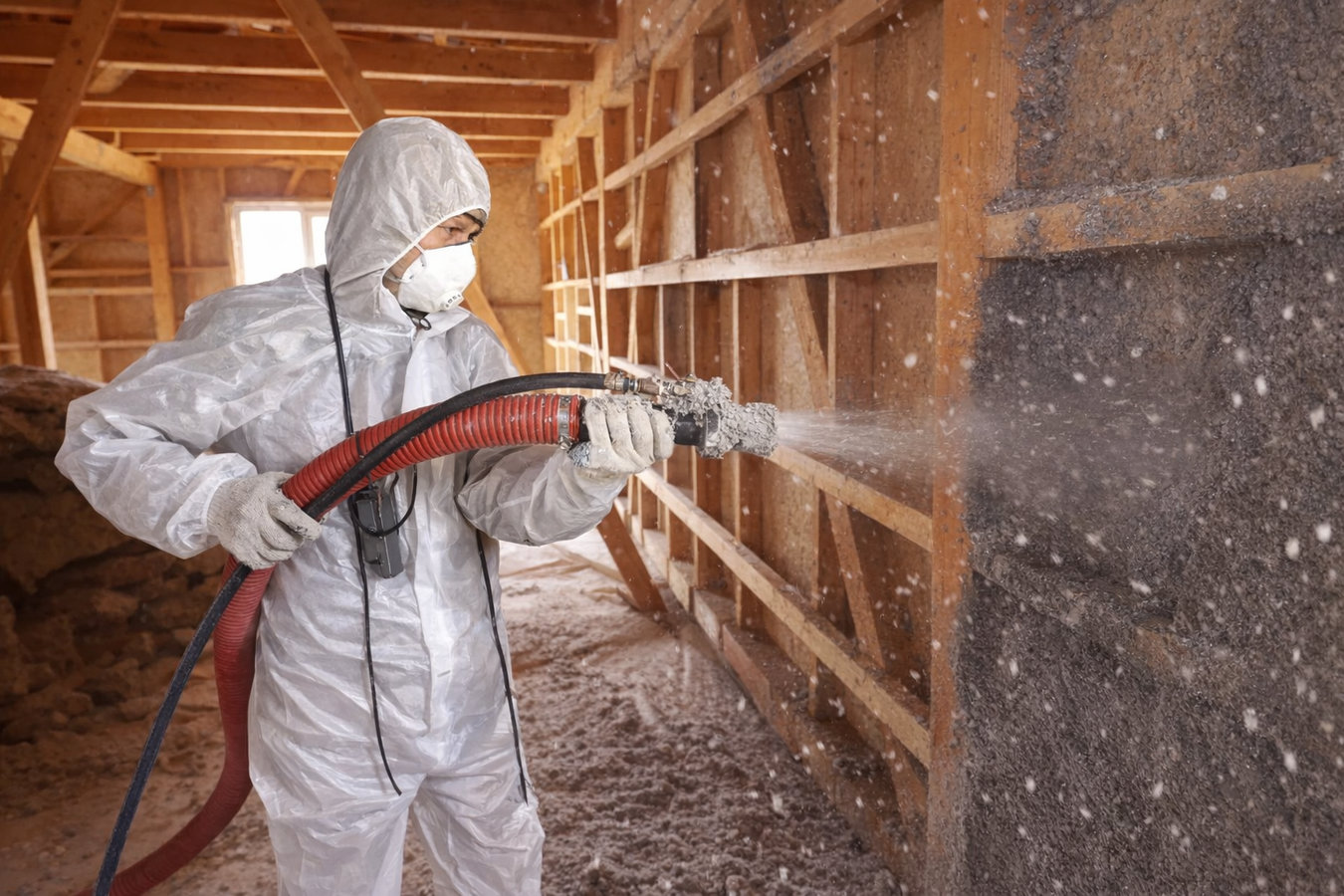
For homes where walls are the bigger problem, retrofit insulation is an option that adds coverage without major demolition - material is blown into wall cavities through small holes that are then patched. For homes with existing material that has been damaged or settled, insulation removal clears the way before new material goes in.
Best for most Dubuque homes - the attic is where the most heat escapes and where blown-in or batt insulation delivers the highest return.
Suited for older homes with little or no wall coverage - retrofit approaches add material without requiring full interior demolition.
Important for homes with cold floors above an unheated space - addresses heat loss from below and can also reduce moisture issues.
For homeowners who want a complete picture before committing - we measure every area and prioritize improvements by impact and budget.
Dubuque is one of the oldest cities in Iowa, and its housing stock reflects that. A large share of homes in the city were built before 1940, particularly in the hillside neighborhoods near downtown. Older balloon-frame construction - common in Dubuque's historic districts - has open wall cavities that run from basement to attic, creating a chimney effect that pulls warm air out of the house all winter. The city also sits along the Mississippi River, which brings consistently high summer humidity and raises moisture risk in under-insulated crawl spaces and basements.
We work throughout the region, including Iowa City, IA and Galesburg, IL, where similar climate conditions and aging housing stock create the same set of challenges. Understanding older construction is not optional here - it is the foundation of doing this work right.
We ask about your home's age, the areas you are concerned about, and what prompted the call. We respond within 1 business day and schedule a free on-site assessment - no phone quoting, no guessing.
We walk through the home, check the attic, basement or crawl space, and look for air leaks around pipes and fixtures. This visit takes 30 to 60 minutes and gives us an accurate picture of what your home needs.
After the assessment, you receive a written estimate specifying what work will be done, what materials will be used, and what it will cost. We tell you upfront whether any permits are needed and handle those ourselves.
On the day of work, the crew seals air gaps first, then installs insulation to the right depth. Before leaving, we walk you through what was done so you can see the coverage yourself - no surprise add-ons after the fact.
We respond within 1 business day - no obligation, no pressure. After you submit the form, someone from our team calls to schedule a free on-site visit. The estimate is written, itemized, and yours to keep whether you book or not.
(563) 227-0181We do not quote insulation over the phone. Every estimate starts with an in-person visit to measure what is there and identify where the biggest heat loss is happening. That is the only way to make a recommendation that actually fits your home.
Many Dubuque homes were built before 1940 and require a different approach than newer construction. We understand how balloon-frame walls, older attic configurations, and aging materials behave - and how to insulate them without creating new problems.
We work across Iowa, Wisconsin, and Illinois, so we understand how similar cold-climate housing challenges play out in communities throughout the region. That breadth of experience translates to more accurate assessments for every homeowner.
Insulation alone does not stop drafts - air sealing does. We address gaps around pipes, wires, and fixtures before any material goes in. ENERGY STAR estimates that proper air sealing combined with insulation can reduce heating costs by roughly 15 percent on average.
Home insulation is one of the most durable improvements you can make to a Dubuque property, and the payoff shows up on every heating bill for years afterward. We do the work in the order and scope that makes sense for your home - not for our schedule.
Safe removal of old, damaged, or contaminated insulation before new material goes in - a necessary first step in many older Dubuque homes.
Learn more →Insulation improvements added to an existing finished home without major demolition - ideal for homeowners who want results without a full renovation.
Learn more →Schedule a free assessment today - Dubuque winters do not wait, and neither should your heating bills.