Loading...
Serving Dubuque, IA and surrounding areas. (563) 227-0181
Dubuque winters run from October through April - if your building is poorly insulated, you are paying for heat that disappears through your walls and roof every single day of that stretch.
Commercial insulation in Dubuque slows the movement of heat through your building's walls, roof, and floors so your heating and cooling system is not fighting a losing battle every month - most projects are completed in one to five days depending on building size and scope. In a properly insulated building, the heat you pay to generate stays inside in winter and the heat outside stays out in summer. In a building that is under-insulated or has degraded material, you simply pay more every month for the same temperature - and the problem gets worse the longer it goes unaddressed.
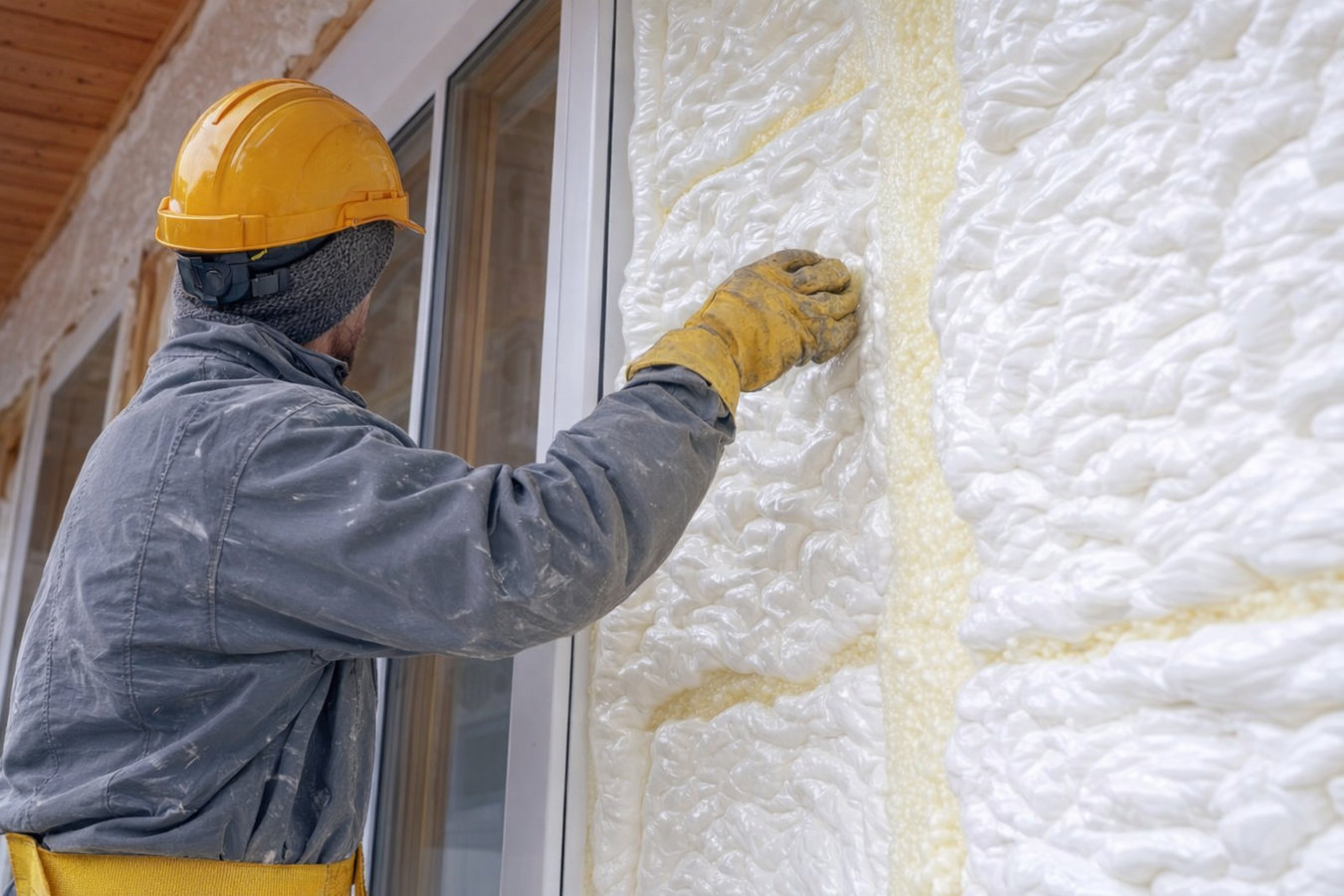
Many of Dubuque's commercial buildings are old, particularly in the downtown corridor and older commercial neighborhoods where brick and masonry construction from the late 1800s and early 1900s is common. Those buildings were constructed before modern insulation standards existed, and most have little to no insulation in their walls or roofs. Upgrading them requires experience with older masonry - not every approach that works in a newer building applies here. Our spray foam insulation service is one of the most effective options for these buildings because it seals air gaps and insulates in a single application.
For businesses looking at a full building upgrade that includes walls and partition systems, wall insulation is often the place to start - it addresses the largest surface area and the most consistent source of heat loss in Dubuque's older commercial stock.
If your energy costs climb sharply from November through March and stay high no matter how you adjust the thermostat, heat is escaping through your building's envelope. In Dubuque's long winters, a poorly insulated commercial building can cost thousands of extra dollars in heating alone. This is one of the most common signs that insulation is missing or has degraded - and one of the easiest to overlook because it builds gradually over time.
If employees in one part of your building are always cold while another area feels fine, insulation is missing or thin in the cold zones. This is especially common in Dubuque's older brick buildings, where insulation was often added unevenly during past renovations or not added at all. No HVAC adjustment fixes the underlying problem - only addressing the insulation does.
Any visible gap where outside air can get in means your building's thermal barrier has failed. In Dubuque winters, frost on the inside of exterior walls or drafts near wall joints are clear signals that cold air is moving through areas that should be sealed and insulated. These are not just comfort problems - every draft is an energy loss you are paying for every month.
Most commercial buildings constructed before the 1980s were built with little or no wall insulation, and whatever was installed has likely settled, compressed, or degraded. If your Dubuque building dates from the mid-20th century or earlier and you have no record of an insulation upgrade, it is almost certainly performing below current standards. The age alone is a reasonable signal to get an assessment scheduled.
We start with an on-site assessment of your building - checking the current state of insulation, identifying problem areas, measuring spaces, and noting any structural or moisture conditions that affect how the work needs to be approached. For Dubuque's historic masonry buildings, this step is particularly important because the wall construction varies significantly from building to building and not every standard insulation method works in every structure. After the assessment, you receive a written estimate that breaks down the scope, the materials, and the total cost - and we recommend getting two or three of these before deciding.
Our commercial work covers spray foam for attics, rim joists, and irregular cavities in older buildings; blown-in loose fill for accessible attic and wall spaces; and rigid foam board for flat surfaces like roofs and basement walls. For Dubuque's Mississippi River corridor buildings, where humidity is a consistent factor, moisture management is built into every recommendation - not treated as an afterthought. We also handle permits through the City of Dubuque Building Services and walk you through the utility rebate process for Alliant Energy and MidAmerican Energy. Our spray foam insulation and wall insulation services are the most commonly requested for commercial buildings in this area.
For commercial buildings where the roof is the primary heat loss area - spray foam or blown-in applied to the deck or attic floor to stop heat from escaping above.
For older buildings with uninsulated or under-insulated exterior walls - injection, dense-pack, or spray foam matched to your wall construction type.
For Dubuque's pre-1950 brick buildings where standard methods do not apply - custom approaches tailored to solid-wall masonry construction.
For buildings with exposed mechanical systems or pipes in unheated spaces - spray foam and batt insulation to prevent heat loss and pipe freeze in Iowa winters.
Dubuque sits in a climate zone where the heating season runs from October through April - six to seven months of continuous heat demand. A commercial building with thin or missing insulation is not just uncomfortable during that stretch, it is expensive every single month of it. Dubuque's downtown and older commercial corridors are filled with brick and masonry buildings from the late 1800s and early 1900s, many of which were built before modern insulation practices existed. Iowa's commercial energy code, which sets minimum insulation requirements for commercial buildings, is enforced through the permit and inspection process managed by the City of Dubuque Building Services office - and any commercial insulation project that requires a permit will be inspected against those standards.
The Mississippi River corridor also adds a moisture dimension that inland Iowa cities do not have at the same level. Dubuque's humidity baseline is higher, and moisture trapped inside walls or ceilings because of incorrect insulation installation can cause mold and structural damage over time. Businesses we work with in Rockford and Madison face similar cold-climate challenges in their commercial buildings, but Dubuque's combination of very old masonry construction and river-valley humidity requires a more careful approach to material selection and installation sequence.
Call or submit a request online and we will get back to you within one business day to schedule a site visit. Come prepared with a rough sense of your building's size and the areas you are most concerned about - that helps the estimator plan their time efficiently.
We walk through your building, assess the current insulation, identify problem areas, and measure the spaces that need work. Within a few days you receive a written estimate with scope, materials, and total cost. We recommend getting at least two estimates before deciding.
Once you accept an estimate, we apply for any required permits through the City of Dubuque Building Services office. We also walk you through rebate programs from Alliant Energy and MidAmerican Energy - some require pre-approval before work begins, so this step happens before the crew is scheduled.
The crew arrives, protects your floors and furnishings, and works through the areas outlined in the contract. Most small to mid-sized commercial projects finish in one to three days. After the work is complete, a city inspector verifies it meets Dubuque's commercial building standards - you receive that documentation for your records.
No obligation. We reply within one business day and come to your building.
(563) 227-0181A significant share of the commercial buildings in Dubuque's downtown corridor were built before 1940. We know the construction methods, the access limitations, and the moisture considerations that come with that building type - and we tailor the approach accordingly.
We pull required permits through the City of Dubuque Building Services office and coordinate the city inspection that follows. You should not have to manage permit paperwork on top of running your business - we handle it as part of the project.
Both Alliant Energy and MidAmerican Energy serve Dubuque commercial customers and offer rebates for insulation improvements. Some programs require pre-approval before work starts. We walk you through the application process during the estimate phase so you do not miss a deadline or leave money on the table. The Insulation Contractors Association of America sets the installation practice standards we work to.
Dubuque's Mississippi River location raises the local humidity baseline compared to inland Iowa cities. We account for moisture vapor management in every commercial recommendation - not just heat resistance - because getting that wrong leads to mold and structural damage that costs far more than the insulation job itself.
Every commercial project we take on in Dubuque starts with a real assessment of your specific building - not a generic quote from a square-footage formula. That process is what lets us give you an accurate number and a recommendation that actually fits your structure and your budget.
The most versatile option for Dubuque's older commercial buildings - seals air gaps and insulates simultaneously, making it well-suited for irregular masonry cavities.
Learn more →Addresses the largest heat loss surface in most commercial buildings - exterior walls that were built without insulation or have underperforming material from past renovations.
Learn more →Heating season in Dubuque runs six months - every month you wait is a month of heat loss you are paying for. Contact us today for a free on-site estimate.