Loading...
Serving Dubuque, IA and surrounding areas. (563) 227-0181
Cold rooms, high heating bills, and ice dams along your roofline are signs your attic needs more insulation. Blown-in material fills every gap for consistent warmth all winter.
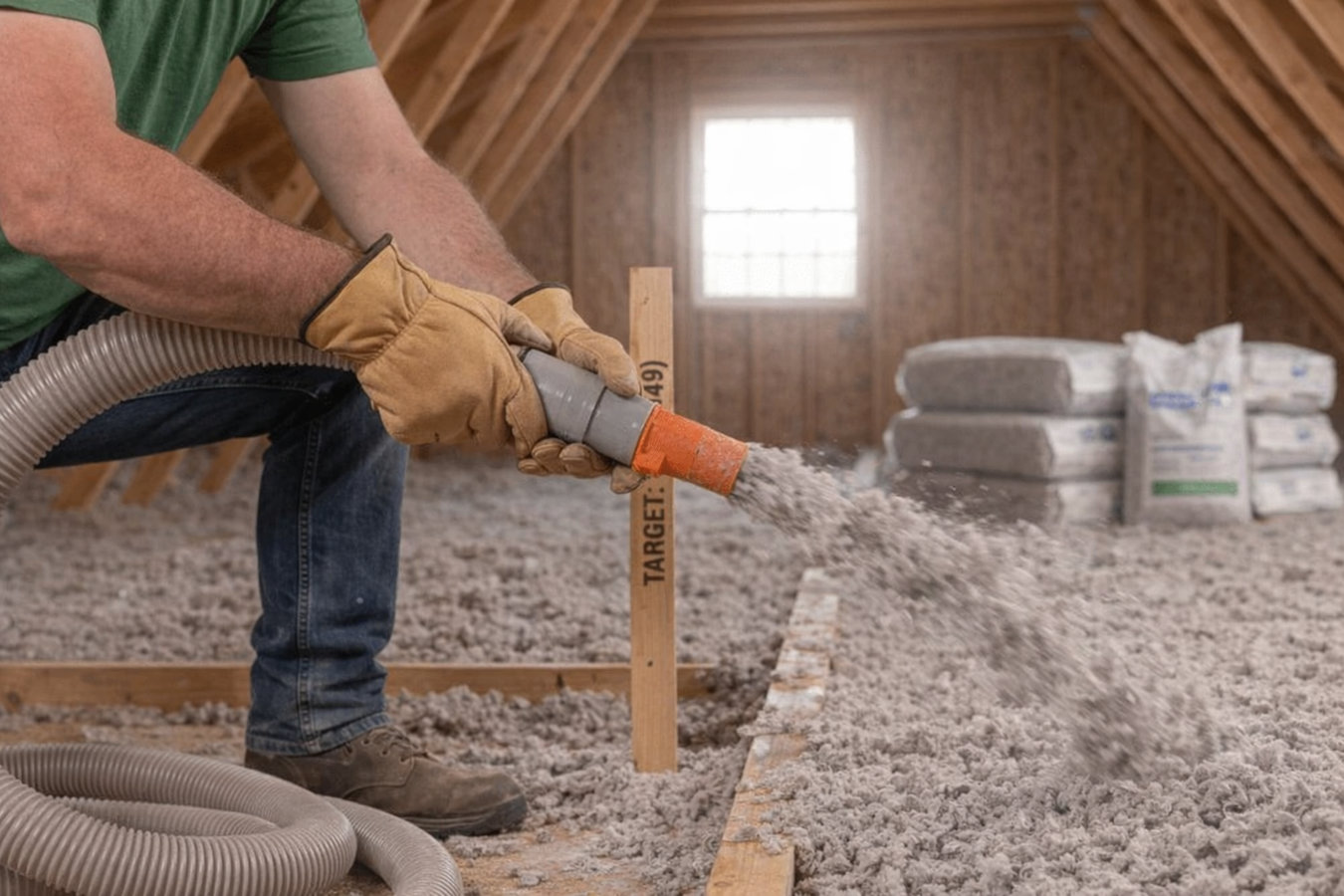
Blown in insulation in Dubuque fills your attic floor with loose fiberglass or cellulose material that completely covers the space above your ceiling - most jobs are finished in a single morning. It reaches irregular framing, corners, and gaps that rigid batts cannot cover, creating a continuous thermal barrier that slows heat from escaping through your ceiling in winter.
Many Dubuque homes were built before modern insulation standards existed. If your home is more than 40 years old and has never had attic insulation added, the heat your furnace creates is likely escaping through the ceiling every winter night. Attic insulation is often the single highest-impact improvement you can make for winter comfort.
The U.S. Department of Energy recommends attic insulation levels for Iowa homes that are significantly higher than what most older Dubuque homes currently have. Learn more about recommended insulation levels for cold climates from the Department of Energy.
If your heating costs climb sharply when Dubuque winters set in and stay high through March, your attic is likely the culprit. Heat rises and escapes through a thin attic layer while your furnace runs constantly trying to compensate.
Take a flashlight into your attic. If you can see the wooden beams across the floor above the insulation, the layer is too thin. A properly insulated Dubuque attic has material that completely buries those joists with several inches to spare.
Ridges of ice building up along your roofline during Dubuque cold snaps are a classic sign of heat escaping through the attic. That warmth melts snow unevenly, which refreezes at the cold eaves - and can eventually back water under your shingles.
If one bedroom or your top floor always feels colder than the rest of the house, even with the thermostat turned up, insulation gaps above that area are the likely cause. Thin or patchy coverage creates cold zones that no amount of heating can fully fix.
Our blown-in insulation work starts with air sealing - not the insulation itself. We seal gaps around light fixtures, pipes, and wiring before any material goes in. Skipping that step means warm air from your living space keeps sneaking into the attic, which undermines the insulation regardless of how thick it is. After sealing, we blow loose-fill material to the right depth for your climate zone and leave depth markers so you can verify the coverage yourself.
For older Dubuque homes with unusually shaped attics or knee walls, whole-home insulation may be a better starting point - it covers the attic, walls, and crawl space in a single coordinated assessment. For attics where moisture has been a problem, we can evaluate conditions before adding material so you are not sealing in an existing problem.
Best for homes where the attic floor needs more depth - the most common and cost-effective improvement for Dubuque homeowners dealing with high heating bills.
Suited for older homes where walls have little or no insulation - material is blown in through small holes that are then patched, with no major interior disruption.
Recommended for any home more than 30 years old - sealing gaps first makes the insulation perform far better than material alone.
For homes that already have some insulation but not enough - adds material to bring coverage up to current recommended levels without full removal.
Dubuque sits in northeastern Iowa where January temperatures regularly drop into the single digits and wind chills push well below zero. That kind of cold puts serious pressure on any gap in your home's thermal envelope, and the attic is almost always where the most heat escapes. The city also has one of the highest concentrations of pre-1940 housing in Iowa - homes built in those decades were often constructed with little or no attic insulation, and many have had nothing added since. If your home is more than 40 years old and sits in one of Dubuque's hillside neighborhoods, the attic above you is likely losing heat every cold night.
Dubuque's Mississippi River location also means consistently high summer humidity, which creates condensation risk in under-insulated attics during winter. We serve homeowners throughout the region - including Cedar Rapids, IA and Waterloo, IA - where older housing stock and similar cold-climate challenges make blown-in insulation one of the most practical home improvements available.
We ask a few basic questions about your home, age, and what prompted your call. We respond within 1 business day and schedule an in-home visit at a time that works for you.
We visit your home, measure existing insulation depth, and look for air leaks around fixtures and pipes. You get a written quote specifying coverage area, depth, and whether air sealing is included - no guesswork.
The crew arrives with equipment and runs a hose from the truck to your attic. Air sealing comes first, then the blowing. Most attic jobs are done within two to four hours. You can stay home the entire time.
Before leaving, we walk you through the finished attic, point out the depth markers so you can verify coverage, and answer any questions. No surprise add-ons after the fact.
We respond within 1 business day - no obligation, no pressure. After you submit the form, someone from our office calls to schedule a free on-site estimate at a time that works for you. The assessment is thorough, written, and yours to keep.
(563) 227-0181We seal gaps before any material goes in. This step is what separates work that actually performs from work that looks done on the surface. Every blown-in job includes air sealing as a standard part of the process.
After every job, we leave small depth indicators in the insulation so you can walk up and verify coverage yourself. You should never have to guess whether the job was done to the right depth for Dubuque winters.
We work across a wide region and understand the housing stock, climate factors, and utility rebate programs specific to this part of the Midwest. Local knowledge matters when you are advising homeowners about insulation.
We do not quote over the phone with a number we made up. Every estimate comes after we see your attic, measure what is there, and assess what it needs. You get the quote in writing before any commitment.
Blown-in insulation is one of the most impactful improvements a Dubuque homeowner can make, and the results should be verifiable. We build our process around transparency so you know exactly what was done and why it works.
Whole-home insulation assessment and upgrades covering attic, walls, basement, and crawl space in one coordinated project.
Learn more →Targeted attic insulation service focused on proper depth and coverage to stop heat loss through your ceiling.
Learn more →Call today for a free on-site estimate and find out exactly what your Dubuque home needs - before another winter of high heating bills.