
Loading...
Serving Dubuque, IA and surrounding areas. (563) 227-0181
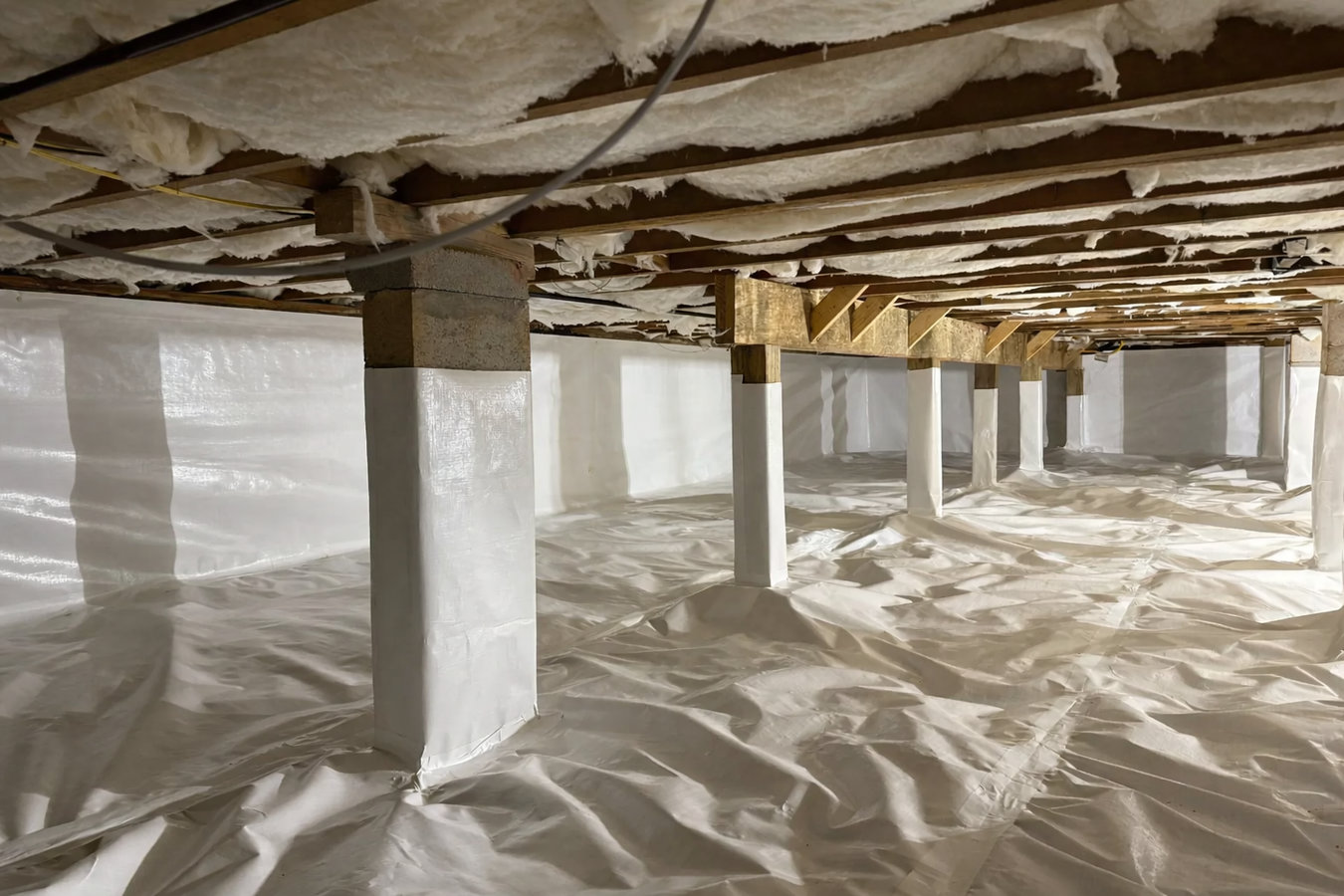
Ground moisture rising through an unprotected crawl space warps floors, breeds mold, and raises heating bills - a properly installed vapor barrier stops it at the source.
Crawl space vapor barrier installation in Dubuque lays heavy-duty polyethylene sheeting across the bare dirt floor of your crawl space to block ground moisture from rising into your home - most jobs are completed in a single day. The plastic covers the entire floor, with seams overlapped and taped and edges secured to the foundation walls so there are no gaps for moisture to sneak through. Without it, your crawl space floor acts like a steady, slow source of dampness that never turns off.
Dubuque has one of the highest shares of pre-1940 homes in Iowa, and houses built in that era were almost never constructed with crawl space moisture protection. If your home is over 50 years old and no one has mentioned the crawl space, there is a real chance it has a bare dirt floor that has been absorbing and releasing moisture for decades. That ongoing moisture works on your subfloor, your framing, and the air quality in your living space every single year. Pairing a vapor barrier with crawl space insulation addresses both the moisture and the heat loss that older crawl spaces typically have at the same time.
For homes where moisture control needs to extend beyond the crawl space floor, we also install vapor barrier installation that runs up the foundation walls and addresses the full perimeter - a more complete solution for homes that have seen persistent dampness over many years.
A damp, earthy odor coming up through your floors is one of the clearest signs of an unprotected crawl space. In Dubuque, this smell tends to get noticeably worse in late March and April, right after the spring thaw when ground moisture is at its peak. If it fades in summer and returns every spring, that seasonal pattern points directly to soil moisture rising from below - not a plumbing issue.
When moisture rises from an unprotected crawl space, it is absorbed by the wood subfloor above it. You might notice boards that feel slightly spongy underfoot, or hardwood that is starting to cup or bow at the edges. This kind of damage builds slowly and is easy to miss at first, but it becomes expensive once the wood framing underneath starts to weaken.
Water droplets forming on metal pipes or HVAC duct surfaces in the crawl space mean moisture levels down there are high enough to cause condensation. This is especially common in Dubuque homes during humid summer months when warm, moist outdoor air meets the cooler surfaces underground. Left unaddressed, that condensation accelerates rust, mold growth, and wood rot.
Many Dubuque homes built before the mid-1970s - particularly in neighborhoods like Langworthy, Eagle Point, and the South End - were constructed with bare dirt crawl spaces and no moisture protection whatsoever. If you have owned an older home for years and the crawl space has never been mentioned, a quick look through the access hatch will tell you a lot. Bare dirt or a thin, torn sheet of plastic means the space has been unprotected for a long time.
We start by accessing your crawl space and assessing what is there - how big the space is, how much clearance there is to work in, whether there is any standing water or debris that needs to come out first, and what condition any existing material is in. If the space needs prep work, we handle it before the barrier goes down. Then we lay the barrier across the entire floor, using material that is at least 10 mils thick and built to handle the occasional foot traffic from a plumber or HVAC tech without tearing. Seams are overlapped by at least a foot and taped - not just butted together - so there are no gaps where moisture can sneak through. We secure the edges to the foundation walls so the barrier stays in place over time.
For homes where a floor-only barrier is not enough - particularly those that have seen persistent dampness for many years or are in lower-lying parts of Dubuque near the river - we offer a full vapor barrier installation that runs the material up the foundation walls and addresses the full perimeter. For homes where the crawl space also lacks insulation, crawl space insulation can be added as part of the same project so everything gets done at once.
Best for most Dubuque homes with bare dirt or poorly protected crawl space floors - covers the full floor with overlapped, taped seams secured to the walls.
For homes with persistent moisture issues or those in lower-lying areas near the river - extends coverage up the foundation walls to address moisture coming from multiple directions.
For crawl spaces that have old, deteriorated material, standing water, or debris - clears and prepares the space before the new barrier goes in so it installs correctly and lasts.
For older Dubuque homes that need both moisture control and thermal performance addressed at the same time - barrier and insulation installed in a single project visit.
Dubuque sits in a cold, wet climate where the ground thaws every spring after months of freezing - and when it thaws quickly, moisture pushes upward through the soil. Homes with unprotected crawl spaces absorb that moisture surge every single year, with the worst effects hitting in late March and April. Add the humidity that comes with sitting directly on the Mississippi River, and Dubuque crawl spaces face a more demanding moisture environment than homes further inland. The city also has a high concentration of pre-1960 housing - a period when builders did not install crawl space moisture protection as a standard practice. That combination of local climate and old construction means vapor barrier work here is not optional maintenance. It is a genuine defense against a recurring seasonal problem that gets worse over time.
Dubuque's hilly terrain adds another wrinkle: water does not drain uniformly away from homes on sloped lots. In some neighborhoods, grading pushes rainwater toward foundations rather than away, which means certain crawl spaces are managing more moisture than a flat-lot home would. Homeowners in Cedar Rapids and Waterloo face similar cold-climate moisture challenges, but Dubuque's river-valley humidity and older housing stock make local knowledge especially important when scoping this work. According to the U.S. Department of Energy, controlling moisture in crawl spaces is one of the most effective steps homeowners in cold, humid climates can take to protect their homes.
When you call or fill out the form, we ask a few basic questions about your home and the crawl space access point. We reply within one business day and can typically schedule an on-site estimate within a few days - no pressure, no commitment required.
We access the crawl space - usually through a floor hatch or exterior panel - and check the size, clearance, existing materials, and whether any standing water or debris needs to come out first. This takes 20 to 40 minutes, and we walk you through what we found before leaving.
You get a written quote that spells out what will be done, what materials will be used, and the total cost. If prep work is needed, it is listed separately so you understand exactly what is included. Take your time reviewing - there is no rush.
The crew brings the sheeting, tape, and fasteners needed to do the job right. They lay the barrier across the entire floor, overlap and tape all seams, and anchor the edges to the foundation walls. Most standard crawl spaces are finished in a single day, and the crew cleans up when they are done.
Free written estimate. No pressure. We reply within one business day.
(563) 227-0181A large share of Dubuque's homes were built before 1960, and that era of construction presents specific challenges - lower crawl space clearance, irregular layouts, and sometimes decades of accumulated debris. We work in these spaces regularly and scope jobs accurately because we know what to expect.
We use 10-mil polyethylene as a standard - not the thinner material that cuts-rate jobs use. Heavier sheeting holds up when a plumber or HVAC tech needs to access the space later, and it does not tear or bunch within a year or two the way thinner plastic does. The Building Science Corporation recognizes heavier material as the appropriate standard for long-lasting crawl space protection.
Dubuque's position on the Mississippi River raises the local moisture baseline compared to inland Iowa cities. We account for that when recommending scope - homes in lower-lying neighborhoods near the river sometimes need a full-perimeter installation rather than a floor-only barrier, and we tell you that upfront rather than after the fact.
Iowa and the City of Dubuque have permit requirements that apply to some crawl space work. We know when a permit is needed for your specific project and handle that process so you are not left to figure it out yourself. Work that gets permitted is work that gets documented - which matters when you sell your home.
We work with Dubuque homeowners from the first call through the final walkthrough, and we show you the work before we leave. Good work leaves a clear record, and that record has value every time someone looks at your home.
Full-perimeter vapor barrier work that extends coverage up the foundation walls for homes with persistent moisture problems or flood-zone exposure.
Learn more →Add thermal protection to your crawl space floor and walls at the same time as the vapor barrier for a complete moisture-and-heat solution in one project.
Learn more →Every year that bare dirt sits under your home is another season of moisture damage building up - call us today and get a free written estimate.