Loading...
Serving Dubuque, IA and surrounding areas. (563) 227-0181
Your home already exists - retrofit insulation adds what was missed or has worn out, so cold rooms, high heating bills, and drafty walls finally get fixed without a renovation.
Retrofit insulation in Dubuque adds insulation material to the attic, wall cavities, crawl space, and rim joists of a home that is already built - without tearing out walls or starting a renovation - and most jobs are completed in one to two days. A contractor blows, sprays, or injects insulation through small openings to fill the gaps where heat or cold air is moving through your home. The result is a house that holds its temperature better, runs its furnace less, and stops the cold-room and drafty-wall problems that no thermostat adjustment can fix.
Most homes in Dubuque were built before modern insulation standards existed, which means the walls and attic are almost certainly below what is recommended for this climate today. For older homes that have not been touched since they were built, retrofit work is often the single most impactful improvement a homeowner can make to comfort and energy costs. Pairing the insulation work with home insulation services is a natural combination for homeowners who want a full-house approach in one project.
If your home has old, damaged, or contaminated material that needs to come out first, we handle that as part of the same project. Our commercial insulation service covers retrofit work in offices, warehouses, and older commercial buildings throughout the Dubuque area.
If your gas or electric bill climbs sharply from October through March and you are not sure why, poor insulation is one of the most common culprits. Dubuque winters are long and cold, and a home losing heat through the attic or walls runs its furnace much harder to keep up. If your bills feel out of proportion to your home size, an insulation assessment is a reasonable first step.
If a bedroom, corner room, or room above a garage never warms up no matter how high you set the thermostat, the insulation in that area is likely thin or missing. This is especially common in older Dubuque homes where wall insulation was never installed or has settled over decades. The fix is usually straightforward once a contractor identifies exactly where the gap is.
Hold your hand near an electrical outlet on an exterior wall on a cold day. If you feel a draft, air is moving through gaps in your wall insulation. This is a very common finding in Dubuque's older housing stock, where many walls were built with no insulation at all. It is a clear sign that both air sealing and insulation work are needed.
Ice dams form when heat escaping through a poorly insulated attic melts snow on the roof, which then refreezes at the cold eaves. They are a well-known problem in Dubuque after heavy snowfall and can force water under shingles and cause ceiling leaks. If you have seen ice dams or water stains near your ceiling in winter, your attic insulation and air sealing almost certainly need attention.
We start with a full home assessment - checking the attic, wall cavities, rim joists, crawl space, and basement ceiling to understand what is missing, what has degraded, and whether any existing issues like older knob-and-tube wiring or moisture need to be addressed before insulation goes in. This step is not a formality: skipping it leads to wasted money on work that does not solve the problem. Once we have a clear picture, we recommend the right material and method for each area - blown-in cellulose or fiberglass for attics, injection foam or dense-pack for enclosed wall cavities, and spray foam for rim joists and crawl spaces.
Before adding any material, we air-seal the gaps and penetrations that let conditioned air escape - this step is often skipped by less careful crews, but it makes a dramatic difference in comfort and results. Every project includes a walkthrough when the work is done, and we provide the product documentation you need to claim the federal tax credit. We also help homeowners navigate utility rebates through Alliant Energy and MidAmerican Energy, including the pre-approval steps that some programs require before work begins. If the project involves home insulation for an entire house or reaches into commercial spaces, our commercial insulation team handles that scope as well.
For homes where the attic is the primary heat loss area - air sealing first, then blown-in insulation to the depth recommended for Dubuque's climate.
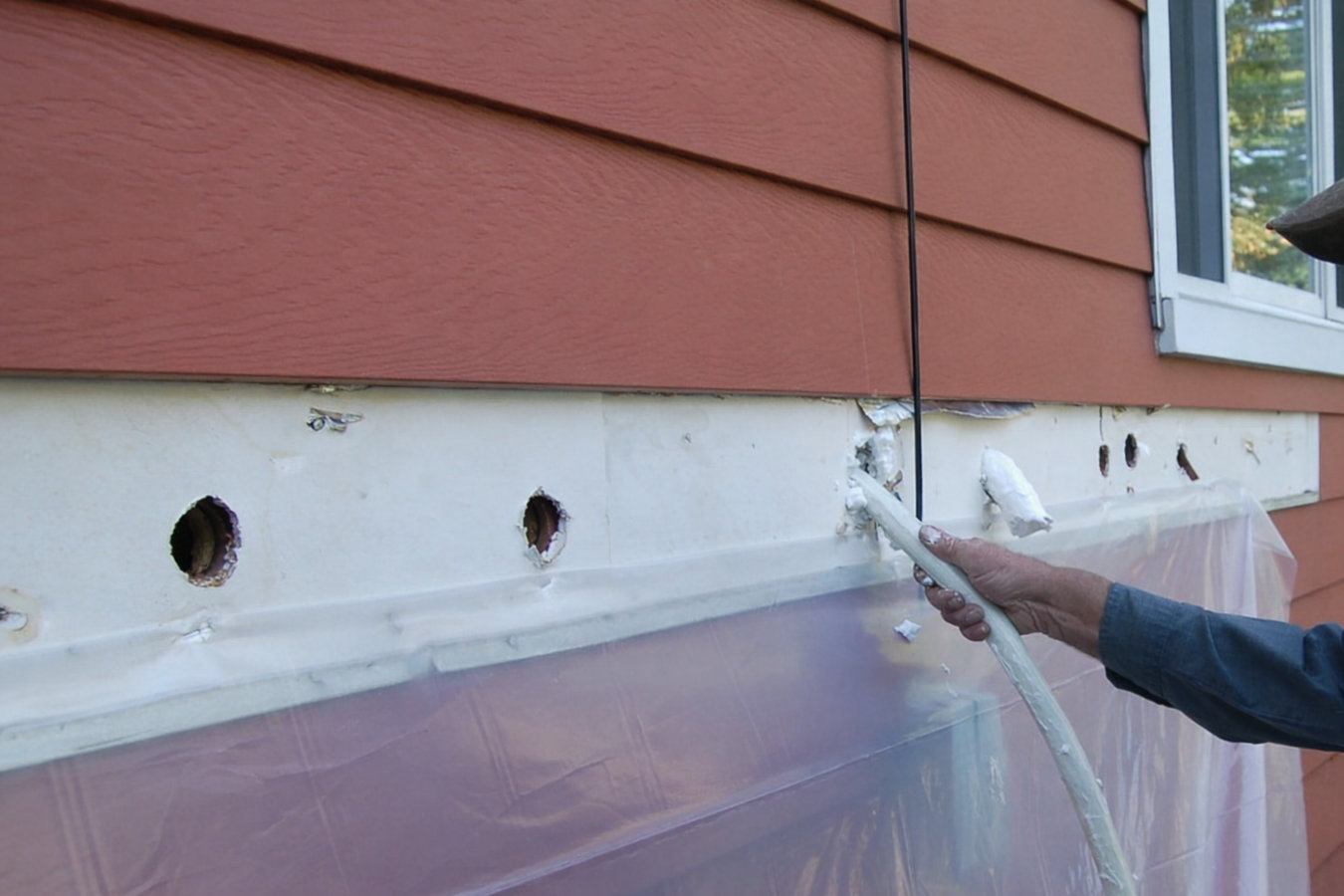
For homes with uninsulated or under-insulated exterior walls - injection or dense-pack through small drilled holes, patched and finished after installation.
For homes with cold basements and drafty sill plates - spray foam applied directly to the rim joist for an air seal and thermal barrier in one step.
For homes where the floor system is the primary source of cold and drafts - insulation and air sealing applied below the living space.
Dubuque sits in IECC Climate Zone 6A - one of the colder classifications in the country - which means the federal recommended insulation levels for attics here are significantly higher than what older homes were built with. Most of Dubuque's housing stock predates modern insulation standards by decades, with a large share of homes built before 1940 in the hillside neighborhoods near downtown, Cable Car Square, and the West End. Those homes were built at a time when wall insulation was rare and attic insulation was minimal at best. According to the U.S. Department of Energy, homes in this climate zone should have significantly more attic insulation than the typical pre-1960 home carries - meaning retrofit work here is not a luxury, it is often overdue maintenance.
Dubuque's bluff terrain also plays a role. Homes on exposed ridgelines and elevated lots face stronger wind exposure than homes tucked into sheltered valleys, which accelerates heat loss through gaps in the building envelope. Homeowners we serve in Cedar Rapids and Waterloo face similar housing-age challenges, but Dubuque's combination of steep terrain, river humidity, and very old construction makes retrofit insulation one of the most consistently impactful upgrades we do in this market.
Call or submit a request online and we will get back to you within one business day to set up a home visit. There is no commitment at this stage - you are simply scheduling a free assessment.
We inspect the attic, walls, rim joist, and crawl space - checking existing insulation levels, moisture, and any older wiring that needs to be addressed first. This visit typically takes one to two hours and you get a clear explanation of what we find.
You receive a written estimate with scope, materials, and total cost. This is the right time to ask about utility rebates - some programs require pre-approval before work starts, so we walk you through that process before anything is scheduled.
The crew arrives, air-seals gaps and penetrations, then installs insulation to the depth right for Dubuque's climate. Most jobs finish in one day. At completion we walk you through the finished work and provide product documentation for your federal tax credit.
Free estimate, no obligation. We reply within one business day.
(563) 227-0181A large share of our retrofit jobs are in homes built before 1940 in Dubuque's hillside neighborhoods. We know what these houses look like inside - the knob-and-tube wiring to check for, the low attic clearances, the irregular wall cavities - and we account for them in every estimate.
We seal gaps and penetrations before adding any insulation material. Many contractors skip this step, but it is what makes retrofit work actually perform. An insulated attic with unsealed bypasses delivers a fraction of the benefit of one that is properly sealed first.
Alliant Energy and MidAmerican Energy both serve Dubuque and offer rebates for insulation upgrades - but some require pre-approval before work begins. We walk you through the process during the estimate so you do not miss a deadline or leave money unclaimed.
As of 2024, qualifying insulation materials are eligible for a federal tax credit worth up to 30% of material cost, capped at $1,200 per year. We provide the product documentation you need to claim it - you should not have to chase paperwork after the job is done. The ENERGY STAR tax credit page has the current eligibility details.
Every retrofit project we do in Dubuque starts with a real assessment - not a sales pitch - and ends with a walkthrough that shows you exactly what was installed and why. That process is how we make sure the work actually solves the problem you called about.
Retrofit insulation for offices, warehouses, and older commercial buildings in Dubuque - the same thorough process applied to commercial-scale spaces.
Learn more →Whole-home insulation planning that coordinates attic, wall, and crawl space work into a single project with one estimate and one crew.
Learn more →Heating season is long here - the sooner the work is done, the sooner you start seeing lower bills. Contact us today for a free estimate.