
Loading...
Serving Dubuque, IA and surrounding areas. (563) 227-0181
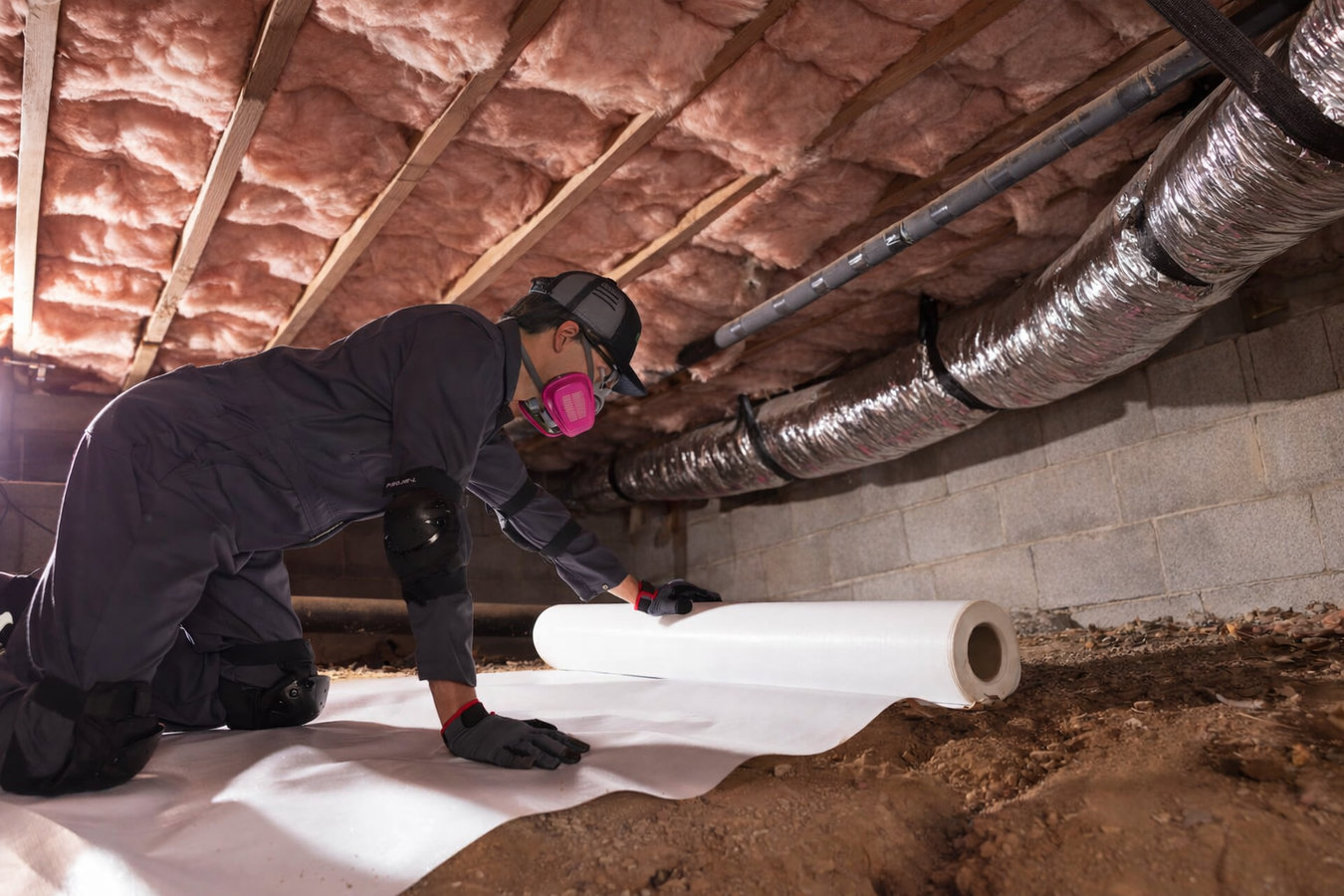
Ground moisture rising through your crawl space damages floors, causes musty odors, and makes your home harder to heat - a properly installed vapor barrier stops it before it reaches your living space.
Vapor barrier installation in Dubuque covers the floor and walls of your crawl space with thick plastic sheeting to block ground moisture from rising into your home - most jobs are completed in one to two days with no disruption to your living areas. The barrier lays over bare soil or concrete, with seams overlapped and taped and edges secured to the foundation walls so no moisture can sneak through the gaps. Without that protection, the soil under your home acts as a continuous source of dampness that feeds mold growth, softens subfloor framing, and forces your heating system to work harder all winter.
Dubuque has a large share of homes built before the 1970s, when crawl space moisture protection was not a standard part of construction. Many of those homes in the North End, Langworthy, and near downtown still have bare dirt floors or old, deteriorated material that stopped being effective years ago. Vapor barrier installation addresses that gap directly - and if the job involves changes to venting or insulation, we handle the permit process through the City of Dubuque Building Services so you are protected. Pairing the barrier with retrofit insulation in the same project is a common approach for older homes that need both moisture control and thermal performance addressed at once.
For homes where the primary concern is the crawl space floor rather than a full perimeter installation, our crawl space vapor barrier service covers that scope - a focused solution for homes where the floor is the main entry point for moisture and the walls are in good shape.
If your hardwood or laminate floors feel noticeably cold underfoot even when the heat is running, moisture from below may be affecting the subfloor. In Dubuque's winters, this is a common early sign that the crawl space is not properly sealed. Soft spots in the floor can mean the wood is absorbing moisture and starting to weaken - something worth catching before it requires a repair, not just a barrier.
A persistent earthy odor - especially after snowmelt or spring rains - means moisture is rising from the crawl space into your living areas. Dubuque's wet springs make this a seasonal pattern for many older homes in the city. If the smell comes and goes with the weather, the crawl space is almost certainly the source, not a plumbing issue.
If you have ever looked into your crawl space and seen exposed soil, or a thin sheet that is ripped or bunched up, your home has no effective moisture barrier right now. Many Dubuque homes built before the 1970s were never given a proper barrier in the first place. Even homes with old material in place may have sheeting so deteriorated that it is no longer blocking anything.
If water pools near your foundation or you see damp walls in the basement after a heavy storm or spring thaw, the ground under your home is wetter than it should be. Dubuque's hilly terrain and seasonal flooding risk mean some neighborhoods see this regularly. A vapor barrier is a critical first layer of protection once any active drainage issues are resolved.
We begin with an on-site assessment of your crawl space - checking the size, access clearance, current conditions, and whether any standing water, old material, or debris needs to come out before the new barrier goes in. The preparation matters: a barrier installed over standing water or debris will not perform the way it should and will not last. Once the space is ready, we lay the barrier across the entire floor using material rated at 10 to 20 mils - thick enough to handle foot traffic from a plumber or HVAC tech without tearing. Seams are overlapped by at least a foot and taped, not just laid together, and the edges are secured against the foundation walls so the barrier stays flat and in place over time.
For homes where a floor-only barrier is not enough - particularly those in lower-lying parts of Dubuque with more persistent ground moisture - we extend the installation up the foundation walls as part of a full perimeter encapsulation. We also pair vapor barrier work with retrofit insulation for older homes that need both moisture control and thermal performance addressed at the same time, and with a crawl space vapor barrier for homes where the project scope is limited to the floor.
For homes where bare soil or deteriorated material is the primary problem - full floor coverage with overlapped, taped seams and wall-secured edges.
For homes with persistent moisture or flood-zone exposure - extends the barrier up the foundation walls to address moisture coming from multiple directions.
For crawl spaces that need old material cleared, standing water addressed, or debris removed before a new barrier can be installed correctly.
For older Dubuque homes that need both a vapor barrier and thermal insulation - addressed together in a single project so you do not have to schedule two visits.
Dubuque sits in Climate Zone 6A - a cold and humid classification that means crawl spaces here face a demanding moisture environment for a large portion of the year. Winters are long and cold, springs are wet, and the city sits directly on the Mississippi River, which raises the local humidity baseline compared to inland Iowa cities. That combination means the seasonal moisture cycle pushing up through unprotected crawl space floors is more persistent and more damaging in Dubuque than in drier parts of the state. According to the Iowa Department of Inspections, Appeals and Licensing, the state building code includes moisture control requirements for crawl spaces - and older homes that pre-date those standards are the ones most likely to be unprotected.
Dubuque's older residential neighborhoods - the North End, Langworthy, the South End, and much of the historic bluff district near downtown - have a high concentration of homes built before moisture control became a standard part of construction. Many of those homes have bare dirt crawl spaces or old, thin material that has been compressing and tearing for decades. Homeowners we serve in Iowa City and Rockford face similar cold-climate moisture challenges, but Dubuque's river-valley position and older housing stock make local experience with the specific access challenges and construction styles of the city especially important for getting the work done right.
When you call or fill out the form, we ask a few basic questions about your home - the size, whether you have a crawl space or basement, and any signs you have noticed. We reply within one business day and can usually schedule an on-site visit within a few days at no charge.
We access the crawl space through the floor hatch or exterior access door and check the size, current material condition, clearance, and whether standing water or debris needs to come out first. This typically takes 30 to 60 minutes, and you get a written estimate before anything is scheduled.
You receive a quote that breaks down exactly what will be done, what materials will be used, and the total cost. If prep work is needed separately from the installation, it is listed distinctly so you understand what is included. There is no pressure to sign - take your time.
The crew installs the barrier, cleans up, and walks you through what was done - or shows you photos if the space is tight. If a permit was required, we schedule the city inspection. The barrier is effective immediately with no curing period needed.
Free written estimate, no obligation. We reply within one business day.
(563) 227-0181We work regularly in homes built before 1970 throughout Dubuque's hillside neighborhoods - homes with irregular crawl space shapes, low clearance, and original construction details that most contractors are not used to dealing with. That familiarity means more accurate estimates and fewer surprises once the job starts.
We use 10- to 20-mil polyethylene rather than the thinner material that keeps initial costs down at the expense of durability. Heavier sheeting holds up when someone needs to access the space after installation, and it stays flat and intact over many years rather than tearing within the first couple of seasons.
Dubuque's position on the river raises the local humidity baseline and means some neighborhoods - particularly those in lower-lying areas near the riverfront - see more persistent ground moisture than inland homes. We assess each home individually and recommend whether a floor barrier is enough or whether full-perimeter coverage is the right call for your specific location. The Building Performance Institute recognizes moisture management as a core component of whole-home performance.
Iowa and the City of Dubuque have permit requirements that apply to some vapor barrier and encapsulation projects. We know when a permit is needed for your specific scope, handle the process with Building Services, and schedule the inspection - so you are not left to navigate that on your own after the work is done.
We show you the finished work before we leave - photos at minimum if the clearance is too tight for you to go in yourself - because good work that is visible and verifiable protects you long after we are gone.
Upgrade insulation in an existing home without a full renovation - a natural companion to vapor barrier work in older Dubuque homes that need both moisture and heat addressed.
Learn more →Focused floor-only vapor barrier coverage for homes where the crawl space floor is the primary moisture entry point and the walls are in serviceable condition.
Learn more →Every season without a vapor barrier is another season of moisture working on your floors and framing - call today for a free written estimate.