
Loading...
Serving Dubuque, IA and surrounding areas. (563) 227-0181
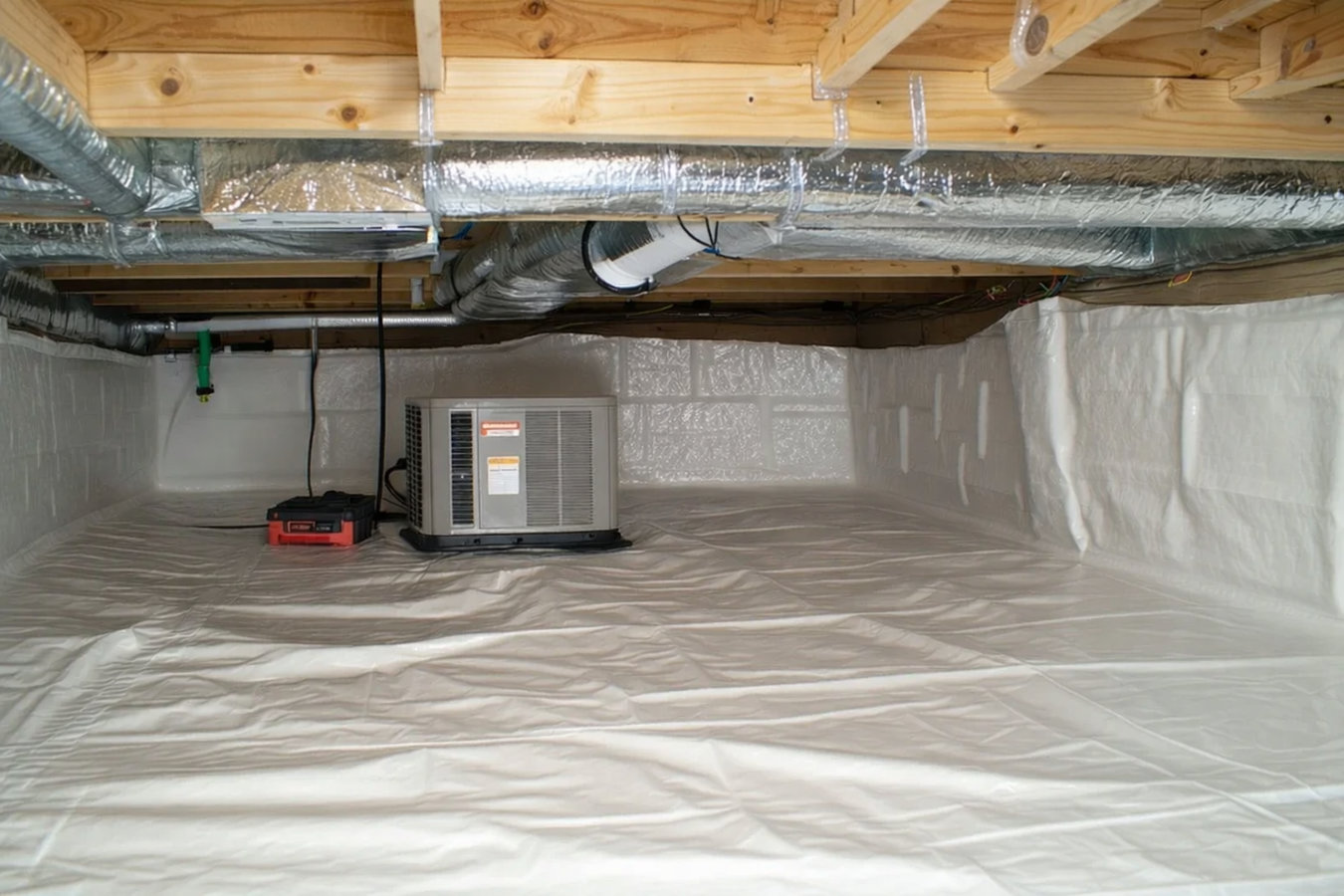
Cold floors, rising heating bills, and at-risk pipes all trace back to the same problem - an unprotected crawl space. We fix that.
Crawl space insulation in Dubuque acts as a thermal barrier between the cold ground and your living floors - most installations are completed in one day and homeowners notice the difference within the first heating season. When the space below your home has little or no insulation, cold air moves upward through the floor and your furnace works overtime trying to compensate.
Dubuque homes - particularly in neighborhoods like Langworthy, the North End, and Jackson Park - were often built with little or no crawl space insulation, and many have original vapor barriers that have long since broken down. The combination of Iowa's freeze-thaw cycles and Mississippi River proximity keeps moisture pressure on these spaces year-round. If your home has an older crawl space, it is worth pairing an insulation assessment with a look at crawl space vapor barrier needs at the same time.
Addressing the crawl space also connects directly to your wall insulation - a complete thermal envelope approach covers both.
If you walk across your kitchen or living room in winter and the floor feels noticeably cold through your socks, cold air is moving up from below. In Dubuque's winters, where temperatures can stay below freezing for weeks at a time, an uninsulated or failing crawl space is one of the most common causes of this problem.
A persistent musty or earthy odor - especially in rooms near the floor - often means moisture is building up in the crawl space below. Dubuque's combination of river-valley humidity and seasonal groundwater movement makes this a common issue, and it usually means the vapor barrier or drainage situation needs attention alongside the insulation.
If your energy costs have been rising but your usage habits have not changed, heat loss through the crawl space may be part of the reason. Insulation installed 20 or 30 years ago - common in Dubuque's older neighborhoods - loses effectiveness over time, especially if it has gotten damp or been disturbed by pests.
Dubuque regularly sees temperatures cold enough to freeze pipes in unprotected crawl spaces. If you had a pipe freeze - or if a plumber warned you that your pipes are at risk - that is a direct signal that your crawl space is not providing enough thermal protection. Proper insulation significantly reduces that risk going forward.
We start every crawl space job with a direct inspection - not just a look from the hatch. The crew goes under the house, checks for moisture, existing material condition, ventilation, and any signs of pest activity or wood damage. From there, we recommend the right approach for your specific crawl space: floor joist insulation for vented spaces, or full encapsulation with wall insulation and a sealed vapor barrier for unvented spaces. Both options connect closely with proper crawl space vapor barrier installation, which we address as part of the same scope when moisture conditions call for it.
If old or damaged material is already in place, we handle removal before new insulation goes in - never piling new material on top of a problem. The finished job should leave a space that fits snugly between joists with no gaps or sagging sections, and a vapor barrier that lies flat against the ground with seams taped. We also coordinate with wall insulation if you are addressing the full thermal envelope of your home at the same time.
Best for vented crawl spaces - insulates from below the living floor for immediate warmth improvement.
Suited for moisture-prone or unvented spaces - seals walls and floor with insulation and vapor barrier together.
For crawl spaces where moisture control is the priority alongside or before insulation work.
For homes where damaged or settling insulation needs to come out before the new job goes in correctly.
Dubuque sits in a climate zone where winter temperatures regularly drop below zero and the heating season stretches from October through April. That means your crawl space is exposed to extreme cold for nearly half the year. Any gap in insulation coverage translates directly into cold floors, higher heating bills, and pipes at risk of freezing. Dubuque's older housing stock - particularly in neighborhoods like the North End and Langworthy, where many homes were built before 1940 - means a large share of the city's crawl spaces have never been properly addressed.
The Mississippi River proximity and the city's hilly bluff terrain create persistent moisture pressure as well. Homes on lower ground or near drainage channels are especially prone to crawl space moisture intrusion after heavy spring rain or snowmelt. Homeowners we work with in Cedar Rapids and Iowa City face cold-climate moisture challenges, but Dubuque's bluff topography and very old housing stock add specific complexity that requires proper assessment before any material goes in.
We will ask about your home's age, whether you have noticed cold floors or musty odors, and when the crawl space was last worked on. We respond within 1 business day and can usually schedule a free in-person estimate within a few days.
We go under the house and check for moisture, pest activity, existing insulation condition, and ventilation setup. A contractor who quotes you without actually going under the house is cutting corners. You will receive a written estimate that details exactly what will be done before any work is scheduled.
The crew enters through the access hatch, removes any old material, and installs the new insulation and vapor barrier. For most homes, this takes one full day. You will hear some movement from below, but your routine in the rest of the house is unaffected.
Before the crew packs up, we provide photos from inside the crawl space so you can see the finished work - because you may not want to go under there yourself. We point out anything worth watching going forward, and you leave with a clear picture of what was done.
We respond within 1 business day. There is no pressure to commit after the estimate - we assess, explain what we found, and give you a written quote. Call us or submit the form and we will get you scheduled.
(563) 227-0181A crawl space assessment that does not involve actually crawling under the house is not an assessment. Every job starts with a direct inspection so our estimate reflects what is actually there - not what a homeowner thinks might be there.
Dubuque's river-valley location and freeze-thaw cycles make moisture assessment non-negotiable. We check for standing water, condensation, and vapor barrier condition before recommending any insulation work. If moisture is present, we address it first - not after the fact.
Most homeowners will never crawl under their house to check the work. We provide photos from inside the crawl space so you can see what was done and confirm it was completed correctly - no guessing, no taking our word for it.
We work in Dubuque neighborhoods with pre-1940 construction regularly, and we know the access point shapes, crawl space heights, and moisture patterns specific to the area. The U.S. Department of Energy crawl space guide outlines the standard approaches - we apply them with knowledge of what Dubuque homes actually look like.
A properly insulated and sealed crawl space pays for itself over several Dubuque heating seasons in reduced energy costs alone - not counting the value of protecting your plumbing and preserving the wood framing above.
The EPA moisture control resource explains why addressing moisture before insulating is essential - worth reading before any crawl space project.
Complete the thermal envelope by addressing your walls alongside the crawl space for consistent comfort throughout your home.
Learn more →A sealed vapor barrier keeps moisture from undermining your crawl space insulation - often installed as part of the same project.
Learn more →Every Dubuque heating season without crawl space insulation is another winter of cold floors and avoidable heating costs - call now for a free estimate.